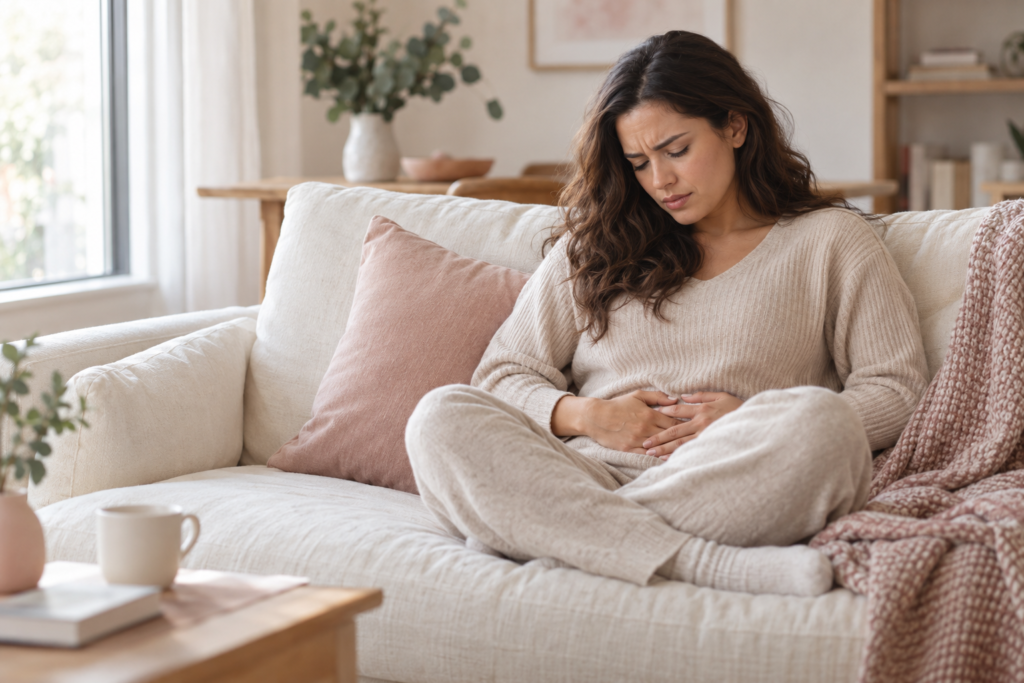
Period cramps are one of the most common experiences among people who menstruate — but “common” does not mean you simply have to suffer through them. The medical word for painful periods is dysmenorrhea, and the good news is that it is very treatable. Here is what it is, why it happens, and what actually helps.
What Is Dysmenorrhea?
Dysmenorrhea simply means painful menstrual periods. The pain is usually a cramping or aching feeling in the lower belly. It can also spread to the lower back and the upper thighs, and it sometimes comes with nausea, diarrhea, headaches, fatigue, or trouble sleeping.
It is extremely common. Depending on how it is measured, somewhere between roughly half and 90% of people who menstruate experience it, and about 1 in 7 miss school or work because of it. Despite how common it is, it is often brushed off — many people assume bad cramps are just a normal part of having a period and never mention it to a doctor. If your pain is interfering with your life, that is worth talking about.
There are two main types:
- Primary dysmenorrhea — period pain with no underlying disease causing it. This is the most common type and usually starts within 6 to 24 months after a person’s first period .
- Secondary dysmenorrhea — period pain caused by an underlying condition, such as endometriosis, fibroids, or adenomyosis.
Why Do Periods Hurt?
During a period, the uterus tightens (contracts) to shed its lining. These contractions are driven by natural chemicals called prostaglandins. People with more painful periods tend to make more prostaglandins, which causes stronger contractions, briefly reduces blood flow to the uterine muscle, and turns up the pain signals. The same chemicals can trigger the nausea and diarrhea that sometimes come along with cramps.
Some things can make primary dysmenorrhea more likely or more severe, including starting periods at a younger age, heavy or long periods, smoking, and high stress.
When to See a Doctor
Typical primary period pain follows a predictable pattern: it starts shortly before or as bleeding begins, is worst during the heaviest flow, and eases up by day 2 or 3. It feels about the same from cycle to cycle and does not steadily get worse over the years.
It is a good idea to get checked out if the pain:
- Gets progressively worse over time or lasts after your period ends
- Started years after your periods began, rather than in your teens
- Is only on one side, or comes at other times in the month
- Comes with abnormal bleeding, pain during sex, or trouble getting pregnant
These features can point to a treatable underlying condition such as endometriosis and deserve further evaluation.
What Actually Helps
The two most effective and best-studied treatments are anti-inflammatory pain relievers and hormonal birth control. Many people can start treatment based on their symptoms alone, without needing tests first.
Anti-inflammatory medicines (NSAIDs). Over-the-counter options like ibuprofen and naproxen work by lowering prostaglandins — the root cause of the pain. A few tips make a big difference:
- Start them 1 to 2 days before your period is due, or right when symptoms begin.
- Take them on a regular schedule for the first 2 to 3 days, rather than waiting until the pain is severe.
- Take them with food to be easier on your stomach.
A common cause of NSAIDs “not working” is simply taking too little, too late. Talk to your doctor or pharmacist about the right dose for you, and check first if you have stomach ulcers, kidney problems, or other reasons to avoid these medicines.
Hormonal birth control. Birth control pills, the patch, the vaginal ring, the hormonal IUD, and the implant all thin the uterine lining and lower prostaglandin production, which reduces cramps. These are considered a first-line option and can be used instead of or alongside NSAIDs — a good choice for people who also want contraception.
Other things that can help. Evidence is more limited, but the following are low-risk and may help on their own or added to the treatments above:
- A heating pad on the lower belly
- Regular exercise
- TENS (a small device that delivers gentle electrical pulses to the skin)
The Bottom Line
Period pain is common, but it is not something you simply have to live with. Simple, affordable treatments help most people, and relief is often just a matter of using them correctly. If first-line treatments do not help after a few months, or if your pain has warning features, see a healthcare provider — effective options and further evaluation are available.
This post is for general education and is not a substitute for personal medical advice. Talk with your healthcare provider about what is right for you.
